 Historical Figure MBTI
3 min read
#200 · 3-20-26 · Ancient Athens
Mys
The Artisan of the Garden
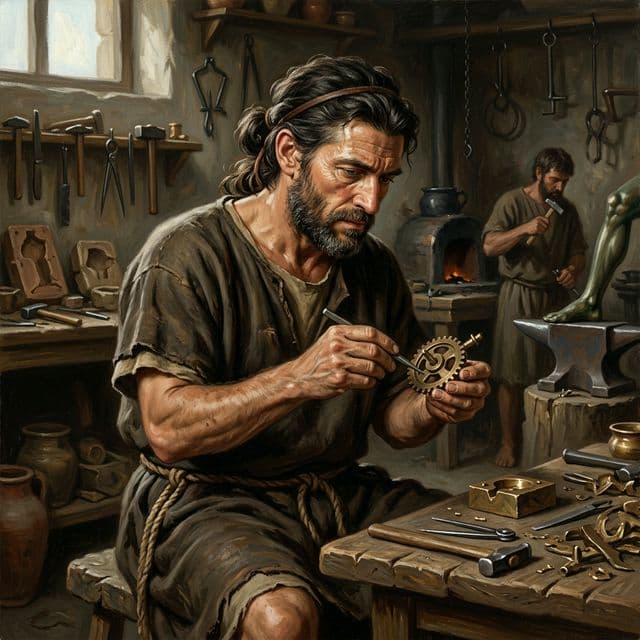
AI-assisted portrait of Mys
The Architecture of Utility
Mys did not seek the spotlight; he sought the stable operation of his environment. As a slave and later a freedman within Epicurus's Garden, his life was defined by the practical maintenance of a philosophical community. His role was one of quiet, effective action, ensuring that the physical foundation of the Garden supported its higher intellectual aims.
He lived as a pragmatic survivor, using his mechanical and organizational skills to build a world that functioned smoothly. His personality was oriented toward the concrete and the immediate, finding a sense of individual agency through the mastery of the physical tools and systems that sustained his chosen family.
Historical Context
Mys was a slave of Epicurus who was manumitted in the philosopher’s will. He was a recognized member of the Epicurean community, reportedly participating in philosophical discussions alongside the free members. His presence in the Garden is a testament to the school's radical inclusivity and its focus on the individual’s subjective freedom, regardless of social status. His life represents the tangible, domestic reality of the most influential private school in antiquity.
The Psychological Verdict
Mys reads most clearly as ISTP. He was a man of quiet, internal logic (Ti) and a focus on practical, sensory engagement (Se), using his skills to maintain the physical integrity of his community.
The Name in the Will
Mys appears in Epicurus’s will as a freedman — a slave whom Epicurus manumitted on his death. That is nearly everything the historical record preserves about him: a name, a status change, a community. What we can infer is that he lived within the Garden for years, participated in its philosophical life, and was remembered well enough to be included in Epicurus’s final document alongside other long-standing members of the school. The Characters of Theophrastus — who was teaching nearby at the Lyceum at roughly the same time — includes personality sketches of tradesmen and artisans as a matter of course. Mys would have recognized himself in those pages. He reads as someone oriented toward the practical and the immediate — ISTP in tendency — which in the context of the Garden meant he was probably the person who made the philosophy livable by keeping everything else running. The quiet dignity of that role is exactly what Epicurus thought constituted the Good Life.
Connected Figures
Further Reading
- Lives of the Eminent Philosophers — Diogenes LaertiusBook Ten preserves the text of Epicurus's will, the only document that names Mys and records his manumission.
- Goddesses, Whores, Wives, and Slaves: Women in Classical Antiquity — Sarah B. PomeroyProvides the wider context of household status and manumission that shaped a life like Mys's within a philosophical school.
- The Cambridge Companion to Aristotle — Jonathan Barnes (ed.)Useful for the rival Lyceum next door, where Theophrastus's Characters sketched tradesmen much like Mys.
