 Historical Figure MBTI
3 min read
#75 · 2-27-26 · The Founding Generation of USA
Maria Reynolds
Central Figure in America’s First Political Sex Scandal
1768 — 1828
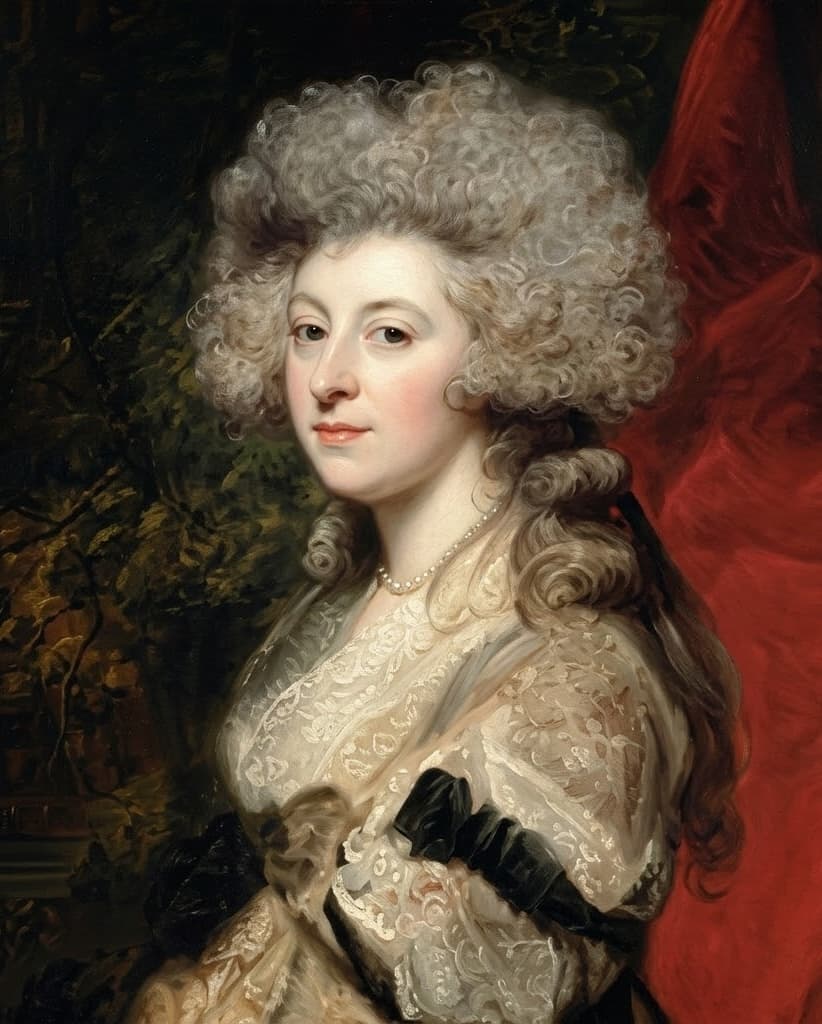
Portrait of Maria Reynolds.
The Woman in the Scandal
Little is known with certainty about the life of Maria Reynolds before she entered the historical record in 1791. A young woman living in Philadelphia, she approached the rising statesman Alexander Hamilton claiming that her husband had abandoned her and that she was in desperate need of help.
What followed became one of the most infamous scandals of the early American republic. Hamilton later admitted that the encounter led to an affair, which soon became entangled with a blackmail scheme involving her husband, James Reynolds.
Years later, when Hamilton’s political enemies accused him of financial corruption, he responded by publishing the Reynolds Pamphlet—a remarkable document in which he publicly confessed the affair in order to defend his integrity.
In doing so, he permanently tied Maria Reynolds to the political mythology of the founding generation.
The Psychological Verdict
Because Maria Reynolds left few writings of her own, any psychological interpretation must remain tentative. Yet the behavioral fragments preserved in the historical record suggest a personality highly attuned to social dynamics and emotional influence.
The most plausible interpretation is ENFJ.
Fe — Dominant
Maria’s entrance into Hamilton’s life came through emotional appeal. Contemporary accounts describe her presenting herself as distressed, vulnerable, and in need of assistance—an approach that immediately elicited sympathy.
Whether entirely genuine or partly strategic, this interaction suggests strong awareness of interpersonal dynamics and the ability to influence them.
Ni — Auxiliary
Maria appears to have navigated complex social circumstances with adaptability. After the scandal unfolded and her husband’s schemes collapsed, she eventually rebuilt her life and remarried.
Her ability to shift direction and reposition herself socially hints at a forward-looking instinct for survival and change.
Se — Tertiary
Her involvement in a risky affair with one of the most powerful political figures in the young republic suggests a willingness to engage directly with immediate circumstances rather than retreat from them.
Ti — Inferior
The chaotic unfolding of the Reynolds affair—combining emotional relationships, financial schemes, and political fallout—suggests a situation driven more by interpersonal dynamics than by careful logical planning.
Context Matters
Maria Reynolds lived in a world where women possessed extremely limited legal and economic independence. Her options for survival and mobility were often mediated through relationships, marriage, and social networks.
Understanding her behavior requires recognizing these constraints. What appears today as manipulation or opportunism may also have been a form of adaptation within a narrow set of available choices.
Connected Figures
Further Reading
- Alexander Hamilton — Ron ChernowThe definitive modern biography of Hamilton; contains the most thorough account of the Reynolds affair and its political fallout.
- The Reynolds Pamphlet — Alexander Hamilton (1797)Hamilton's own published confession, the primary source document that fixed Maria Reynolds's name in the historical record.
- Founding Mothers: The Women Who Raised Our Nation — Cokie RobertsExamines the lives of women in the founding era, offering context for the constraints women like Maria Reynolds navigated.
