 Historical Figure MBTI
3 min read
#72 · 2-25-26 · The Civil Rights Movement
Margaret Murray Washington
The Keeper of Standards
1860s — 1925
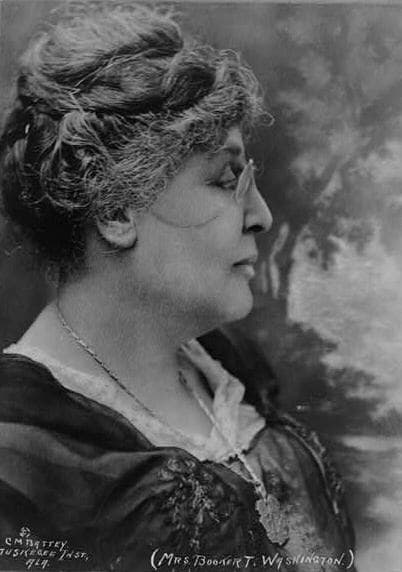
Historical Portrait of Margaret Murray Washington.
The Keeper of Standards
Born in the early 1860s in Mississippi to formerly enslaved and working-class parents, Margaret James Murray Washington rose through discipline.
She excelled academically, advanced rapidly in school, completed her studies at Fisk University, and entered educational leadership before she ever married Booker T. Washington.
She did not become influential through spectacle. She became influential through structure.
At Tuskegee Institute, she served as Lady Principal, overseeing women’s education, dormitory conduct, and moral training. In a household that doubled as a national political nerve center, she maintained order, decorum, and institutional stability.
If Washington built the machine,
Margaret kept it calibrated.
The Psychological Verdict
Margaret Murray Washington aligns most coherently with ISTJ (Si–Te–Fi–Ne).
Her life reflects: strong historical grounding (Si), practical, corrective logic (Te), quiet internal moral seriousness (Fi), and limited outward ideological expansion (Ne).
She was not a revolutionary theorist. She was a disciplined reformer.
Si — Dominant
Her speeches and leadership consistently emphasize: cleanliness, health practices, moral discipline, character formation, respectability, and generational responsibility.
In “We Must Have a Cleaner Social Morality,” she does not abstract the problem of race into philosophical theory. She roots it in lived behavior: infant mortality rates, hygiene habits, illegitimacy statistics, and daily conduct.
Her method is historically grounded correction. She looks at the condition brought by slavery and asks: How do we stabilize and improve from here?
That is precedent-conscious forward repair.
Te — Auxiliary
Margaret does not merely moralize. She instructs.
Bathe twice a week. Secure a physician. Teach boys respect for marriage. Organize mothers’ meetings. Correct negligence.
Her rhetoric is practical and implementation-driven. She structures improvement through behavioral standards. Even her call to “lift as we climb” functions as operational instruction — success must produce measurable communal elevation.
This is structured reform, not abstract theorizing.
Fi — Tertiary
Though not emotionally demonstrative, Margaret’s conviction is visible in her seriousness. She frames racial uplift as personal responsibility. She refuses indifference. Her moral intensity is internal, not performative.
She does not seek applause.
She seeks correction.
The Household Dynamic
In the Washington home — which was both domestic space and political center — Margaret provided stability. Contemporary descriptions emphasize order, decorum, and discipline rather than warmth or flamboyance.
She did not compete for vision leadership. She reinforced structure.
Booker T. Washington (ENTJ)
He negotiated power externally.
Margaret Murray Washington (ISTJ)
She safeguarded conduct internally.
The ENTJ + ISTJ pairing is psychologically coherent: He expanded influence; she maintained standards.
Connected Figures
Further Reading
- Booker T. Washington: The Wizard of Tuskegee, 1901–1915 — Louis R. HarlanThe definitive biography of Booker T. Washington; Margaret appears throughout as a stabilizing force in the Tuskegee household and institution.
- Booker T. Washington: The Making of a Black Leader, 1856–1901 — Louis R. HarlanThe first volume of Harlan's Pulitzer Prize-winning biography, covering the founding of Tuskegee and Margaret's arrival as Lady Principal.
- Uplifting the Women and the Race: The Educational Philosophies and Social Activism of Anna Julia Cooper and Nannie Helen Burroughs — Karen A. JohnsonSituates Margaret's philosophy of racial uplift and women's education within the broader Black women's club movement she helped lead.
- A Voice from the South — Anna Julia CooperAn 1892 landmark of Black feminist thought that shaped the uplift ideology Margaret practiced at Tuskegee — essential context for her worldview.
