 Historical Figure MBTI
2 min read
#239 · 3-23-26 · The Age of Alexander
Barsaentes
Satrap · Conspirator · Fugitive
died c. 327 BC
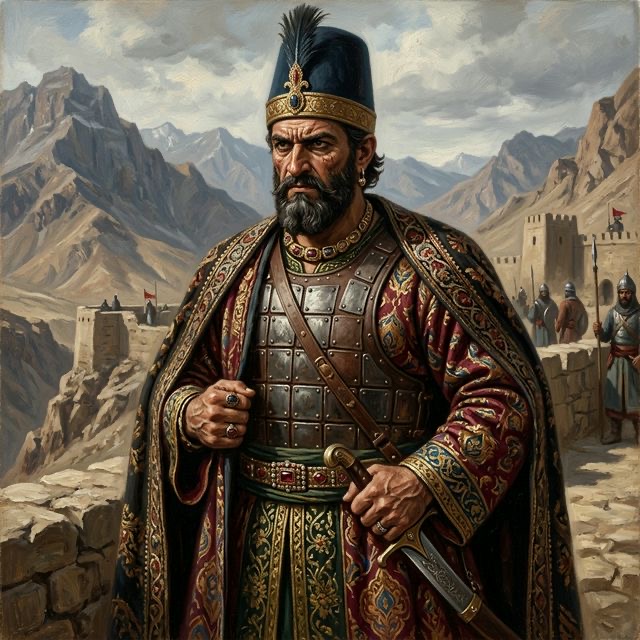
AI-assisted portrait of Barsaentes
The Satrap Who Ran Out of Road
Barsaentes governed Arachosia and Gedrosia — the southeastern edge of the Achaemenid Empire, roughly modern Afghanistan and Balochistan — under Darius III. After Gaugamela, he joined Bessus and Nabarzanes in the conspiracy to arrest Darius, and he was present when Bessus speared the king. When Alexander closed in on Bessus's forces, Barsaentes fled east — into his own province, then beyond it, into India.
He was among the few conspirators who did not eventually surrender to Alexander. Instead, the Indian king Sambus — whose territory Barsaentes had entered — had him arrested and sent him back to Alexander in chains. He was executed around 327 BC. His story is the story of a man who backed the wrong coup and then ran to a place that turned out to have no exits.
The Dutiful Conspirator
Dominant Si in an ISTJ produces loyalty to established hierarchy and procedure. Barsaentes served the Persian system his entire career. When the system collapsed at Gaugamela, he followed Bessus — who presented himself as the legitimate successor and new Artaxerxes — rather than surrendering to Alexander as Mazaeus had done. This was not cynical calculation; it was a rule-follower's instinct to find the nearest legitimate authority and attach to it. Bessus wore the upright tiara and claimed the title. For Barsaentes, that was enough.
What he lacked was the Ni-foresight of someone like Mazaeus — the capacity to see that Bessus's claim was doomed before it began. He chose continuity over survival. He fled east because that was the established response to a lost battle: retreat to defensible territory. The problem was that Alexander's empire had no defensible edges.
The Psychological Verdict
Barsaentes was an ISTJ — competent within the system he served, incapable of the adaptive flexibility that survival in Alexander's world required. He was a dutiful satrap, a conventional conspirator, and a methodical fugitive. None of it was enough.
Connected Figures
Further Reading
- From Cyrus to Alexander: A History of the Persian Empire — Pierre BriantPlaces Barsaentes among the eastern satraps whose choices after Gaugamela determined the empire's final collapse.
- The History of Alexander — Quintus Curtius RufusThe richest narrative of the conspiracy against Darius III and Barsaentes's flight into Bessus's failed regime.
- Who's Who in the Age of Alexander the Great: Prosopography of Alexander's Empire — Waldemar HeckelThe standard reference entry for the satrap of Arachosia and Gedrosia handed over by the Indian king Sambus.
